
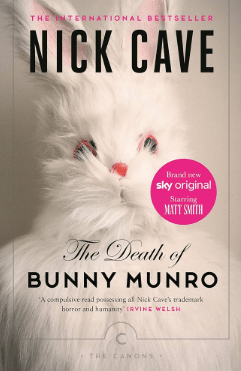
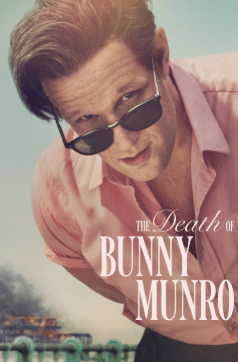
There are some stories that feel almost designed to exist in more than one form, and The Death of Bunny Munro is one of them. Written by Nick Cave, the novel is dark, chaotic, and deeply uncomfortable at times – a descent into grief, addiction, and self-destruction. The television adaptation, however, reshapes that same material into something more emotionally accessible and, in many ways, more affecting.
Having experienced both, I found myself with mixed feelings. I didn’t dislike the book – it has moments of sharp insight and a very distinctive voice – but I also didn’t connect with it as much as I expected. The series, on the other hand, drew me in far more strongly, largely because it made me actually feel for Bunny in a way the novel didn’t quite achieve for me.
The Story: A Downward Spiral
At its core, The Death of Bunny Munro follows a travelling salesman whose life is built around impulse, excess, and avoidance. After the suicide of his wife, Libby, Bunny is left alone with his young son, Bunny Junior. Instead of confronting his grief, he continues his hedonistic lifestyle, dragging his son along with him as he moves from town to town.
Both the book and the series chart Bunny’s gradual psychological and physical decline. His behaviour becomes increasingly erratic, his grip on reality begins to slip, and his guilt manifests in surreal, often disturbing ways. The story doesn’t build toward redemption so much as inevitability – this is a character heading toward collapse from the very beginning.
The Novel: Intense, Repetitive, and Unfiltered
The novel leans heavily into Bunny’s internal world. Nick Cave’s prose is often striking – there are passages that feel almost poetic in their bleakness – but the experience of reading it can also be overwhelming. Bunny’s thoughts are relentless, dominated by compulsions, objectification, and emotional avoidance.
While this is clearly intentional, it made the book harder to connect with. Spending so much time in Bunny’s head can feel repetitive, even exhausting. His behaviour doesn’t change dramatically, and while there is a kind of progression – particularly in how his grief and guilt surface – its subtle and not especially satisfying in a traditional narrative sense.
That said, there is a form of character development. Bunny becomes more exposed as the story goes on. The bravado fades, and what’s left is something more fragile and broken. It’s not growth in the sense of improvement, but rather a gradual stripping away of illusion. Whether that resonates will depend on the reader.
For me, it was interesting, but not particularly enjoyable. I can appreciate what the novel is doing, but it’s not something I’d revisit.
The Series: A More Human Bunny
The television adaptation, The Death of Bunny Munro, takes that same core story and makes one crucial shift – it allows you to feel for Bunny.
A huge part of that comes down to Matt Smith’s performance. He brings a level of vulnerability and emotional nuance that isn’t always easy to access in the novel. On screen, Bunny isn’t just abrasive or self-destructive – he’s visibly grieving, struggling, and, at times, painfully aware of his own failures.
That added dimension makes a significant difference. Moments that might feel repetitive in the book become layered with meaning in the series. A glance, a pause, or a shift in tone can reveal conflict that the novel expresses more bluntly.
The relationship between Bunny and his son is also more emotionally immediate in the adaptation. Watching their interactions unfold adds weight to the story, making tragedy feel more personal and less abstract.
Tone and Impact
Both versions of the story are undeniably dark, but they land differently. The novel feels harsher and more isolating, immersing you fully in Bunny’s distorted perspective. The series, while still bleak, offers more space for empathy.
This difference changes the overall impact. Where the book can feel like an endurance test at times, the series feels more like a tragedy – something you experience with character rather than simply observe.
Final Thoughts
Taken together, The Death of Bunny Munro is a fascinating example of how the same story can evolve across mediums.
The novel is bold, uncompromising, and stylistically distinctive, but also difficult to fully engage with. It’s the kind of book you might admire more than enjoy. Fror me, it was an okay read – worth experiencing once, but not something I’d go back to.
The series, however, adds an emotional layer that makes the story more compelling. By bringing out Bunny’s vulnerability, it transforms him from a character you observe into one you can genuinely feel for.
Neither version is perfect, but together they offer a more complete picture. The book provides the raw, unfiltered interior, while the series gives that interior a human face.
And in this case, that face makes all the difference.


Leave a Reply