
Few artists in modern history carry the weight, influence, and controversy of Michael Jackson. So, it’s no surprise that Michael, the long-awaited biopic directed by Antoine Fuqua, arrives with enormous expectations — and just as much scrutiny.
This isn’t just another music biopic. It’s an attempt to capture a figure who reshaped pop culture while living under an almost unimaginable spotlight.
A Performance That Carries the Film
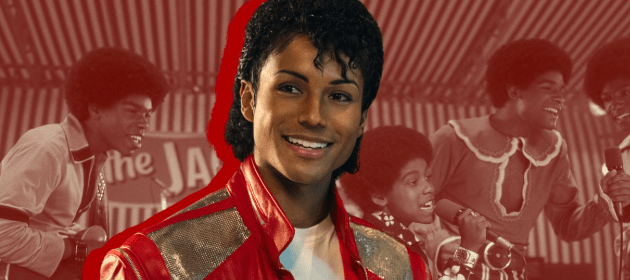
At the center of Michael is Jaafar Jackson, whose, casting alone sparked widespread attention. Portraying his real-life uncle, Jaafar delivers a performance that goes beyond imitation.
What stands out most isn’t just how closely he matches Michael’s voice and movement — it’s the emotional restraint. The film doesn’t lean entirely on spectacle; instead, it focuses on the internal pressures behind the persona. From the early days of the Jackson 5 to the height of global fame, the performance feels layered, not just performative.
The Rise, the Pressure, the Persona
Like many biopics, Michael follows a familiar arc — rise to fame, peak success, and the personal cost that comes with it. But what makes this film stand out is how heavily it leans into the idea of identity.
Michael Jackson wasn’t just a performer; he was a constructed image, constantly evolving and constantly scrutinized. The film explores that duality:
- The child star vs. the global icon
- The private individual vs. the public spectacle
- The artist vs. the brand
The early sections, focusing on his childhood and relationship with his father, are particularly impactful. They provide context for the perfectionism and drive that defined his career — without feeling overly simplified.
The Music: More Than Nostalgia
A film like this lives or dies by how it handles the music, and Michael doesn’t disappoint. Iconic tracks aren’t just inserted for recognition — they’re integrated into the storytelling.
Performances tied to albums like Thriller and Bad feel purposeful, showing not just the final product but the creative process behind them. The choreography, staging, and recording sessions highlight why Jackson’s work wasn’t just popular — it was groundbreaking.
The Difficult Balance
One of the biggest challenges Michael faces is how it handles the more controversial aspects of Jackson’s life.
The film doesn’t ignore them — but it approaches them carefully, sometimes cautiously. For some viewers, this will feel respectful; for others, it may feel like the film pulls its punches.
That tension is unavoidable. Telling Michael Jackson’s story means navigating both admiration and criticism, and the film walks a very fine line between the two.
Direction and Tone
Antoine Fuqua brings a polished, cinematic style that elevates the material. The concert sequences are large and immersive, while the quieter moments feel intimate without becoming overly sentimental.
There’s a noticeable shift in tone as the film progresses — starting with energy and momentum, then gradually becoming more introspective. That shift mirrors Jackson’s life, though at times it can make the pacing feel uneven.
Final Thoughts
Michael is ambitious — and it needs to be. Telling the story of Michael Jackson was never going to be simple or universally satisfying.
What the film does well is capture the scale of his impact and the complexity of his identity. It doesn’t fully resolve the contradictions surrounding him — but perhaps that’s the point.
This isn’t just a celebration or a critique. It’s a portrayal of a life that was both extraordinary and deeply complicated.
And whether you walk away impressed, conflicted, or somewhere in between… that feels like an honest reflection of the man at the center of it all.


Leave a Reply