
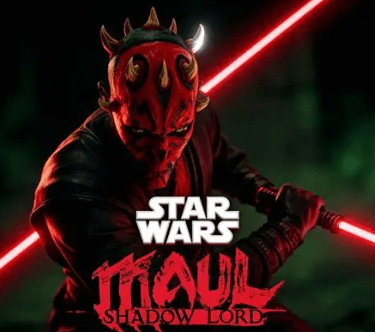
There’s something deeply compelling about watching a character who was never meant to be the center of the story finally take control of it. Episodes 3 and 4 of Maul: Shadow Lord lean fully into that idea, shifting from atmospheric setup into something far more intense, personal, and dangerous. If the first two episodes were about reintroducing Maul as a force, these chapters are about defining what kind of force he actually is.
Episode 3: Power Isn’t Given—It’s Taken
Episode 3 opens in a way that immediately raises the stakes. Gone is the slow-burn pacing; instead, we’re dropped into the consequences of Maul’s growing influence. His criminal network is no longer a shadowy concept—it’s alive, unstable, and starting to attract attention from both allies and enemies.
What stands out most in this episode is Maul’s leadership style. He doesn’t inspire loyalty in the traditional sense; he enforces it. There’s a chilling sequence where he confronts a group of underlings who have begun to question his authority. The tension doesn’t come from whether Maul will act—but how far he’ll go when he does. The scene is quiet, almost restrained, which somehow makes it more unsettling when it finally snaps.
At the same time, Episode 3 gives us glimpses of something deeper beneath the surface. Through brief flashbacks and fragmented visions, we see echoes of Maul’s past—his training, his suffering, and the shaping of his identity. These moments don’t soften him, but they do add texture. He’s not just driven by ambition; he’s driven by something closer to obsession.
Visually, the episode leans into darker tones—literally and thematically. Dimly lit corridors, neon-soaked underworld settings, and tight framing all contribute to a sense of claustrophobia. It feels like everything is closing in, even as Maul’s power expands.
By the end of Episode 3, one thing is clear: Maul isn’t just building an empire. He’s daring the galaxy to notice.
Episode 4: The Cost of Control
If Episode 3 is about ascent, Episode 4 is about instability. Power, as the show makes painfully clear, comes with a cost—and Maul is starting to feel it.
This episode shifts focus slightly, introducing more external pressure. Rival factions begin to move, sensing opportunity in the cracks forming within Maul’s organization. What’s interesting is that these threats aren’t portrayed as overwhelmingly powerful; instead, they’re opportunistic, patient, and strategic. It’s a reminder that Maul’s greatest vulnerability isn’t brute force—it’s overreach.
One of the most compelling threads in Episode 4 is Maul’s internal conflict. Not in a moral sense—he’s not questioning whether he’s right or wrong—but in a control sense. There are subtle indications that maintaining his empire is harder than conquering it. His temper flares more quickly, his decisions become sharper, and there’s a growing unpredictability to his actions.
A standout moment comes during a negotiation scene that quickly spirals out of control. What begins as a calculated display of dominance turns into something far messier, revealing how thin the line is between calculated intimidation and outright chaos. It’s in these moments that the show really shines, allowing Maul to feel both powerful and dangerously unstable.
Episode 4 also deepens the world-building. We see more of the systems and structures that support the galaxy’s underworld, making Maul’s ambitions feel both more impressive and more precarious. He’s not just fighting individuals—he’s pushing against entire ecosystems of power.
A Turning Point for the Series
Taken together, Episodes 3 and 4 feel like a pivot point. The story moves from introduction to escalation, from mystery to momentum. Maul is no longer operating in the shadows—he is the shadow, stretching across multiple layers of the galaxy.
What makes these episodes particularly effective is their refusal to simplify him. He’s not a misunderstood antihero, nor is he a one-dimensional villain. Instead, he’s something far more uncomfortable: a character whose clarity of purpose makes him compelling, even as his methods make him terrifying.
The pacing, performances (especially the voice work), and visual direction all come together to create something that feels both intimate and expansive. There’s a sense that the story is tightening even as the stakes grow larger—a difficult balance that the show handles with surprising confidence.
If the rest of the season continues along this trajectory, Maul: Shadow Lord might end up being one of the most psychologically engaging entries in the Star Wars universe—not because it redeems its central character, but because it refuses to.
And after Episodes 3 and 4, it’s clear: Maul doesn’t need redemption. He needs control—and he’s willing to burn everything to get it.


Leave a Reply